Materials & Fabrication
Material Selection Workflow for Light-Transmitting Decorative Projects
Published
This article outlines the key workflow for selecting light-transmitting decorative materials, from design discussion and sample confirmation to construction and on-site execution, helping reduce repeated revisions and communication costs.

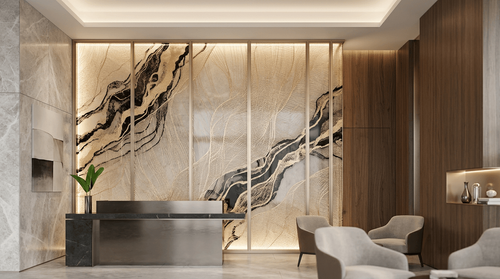
In projects using light-transmitting decorative materials, material selection is not only about choosing a panel. It also involves design coordination, sample confirmation, lighting integration, detailing and on-site execution. A clear workflow often has a direct impact on project efficiency and final effect.
I. Defining Material Direction in the Design Stage
At the beginning of a project, the main material direction should be defined according to space positioning, style goals and budget range. This may include deciding whether translucent resin panels, acrylic or other light-transmitting materials are suitable. The focus at this stage is to establish direction rather than finalising detailed parameters too early.
II. Sample Confirmation and Effect Verification
Once the project enters design development, sample confirmation should be arranged as early as possible. Samples help evaluate colour, texture, translucency and the actual appearance when combined with lighting. They also help confirm whether the material direction matches the design intent before large-scale adjustments become necessary.
III. Matching Details with Construction Conditions
After the material direction is confirmed, installation structure, edge finishing, joint details, lighting positions and maintenance methods must be coordinated at the same time. Since each project has different structural conditions, sizes and site limitations, detailing should be developed together with the material rather than treated separately.
IV. Production and On-Site Coordination
Before fabrication and construction begin, dimensions, numbering, fabrication methods and on-site installation conditions should all be aligned. This is especially important for irregular structures or large-area applications, where better early coordination can lead to smoother site work and fewer later adjustments.
Overall, the workflow for selecting light-transmitting decorative materials is essentially a coordination process between design, material and construction. With a clear process and early confirmation of key points, project teams can improve execution efficiency while maintaining the intended visual result.